On This Day In History
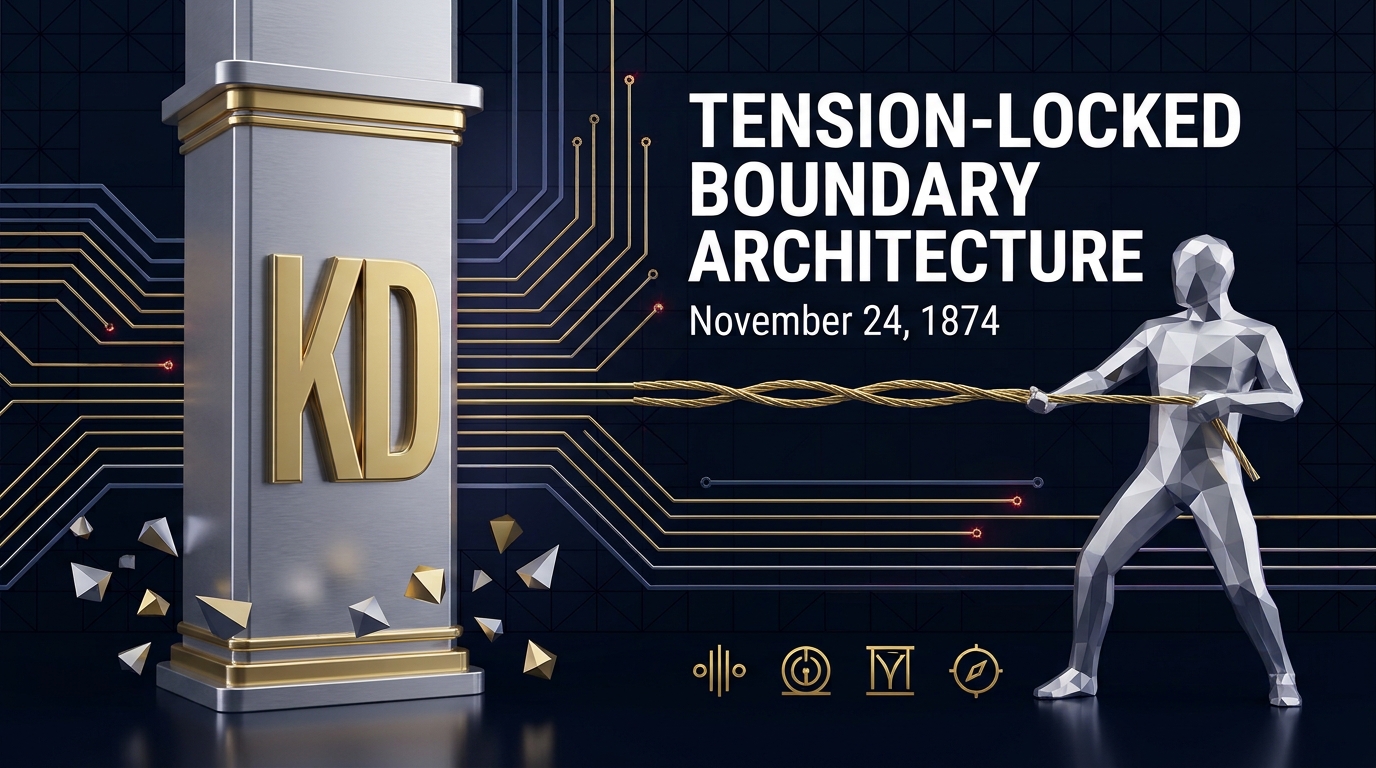
Across the nineteenth-century American plains, homesteaders watched entire harvests vanish overnight beneath wandering herds of longhorn cattle. Wooden timber was scarce, stone was nonexistent, and smooth wire snapped easily whenever heavy animals leaned against it during winter storms. Working with a modified coffee mill in DeKalb, Illinois, farmer Joseph Glidden engineered a simple two-strand wire where one strand locked sharp barbs firmly in place while the second prevented them from sliding. On November 24, 1874, the United States Patent Office granted Glidden Patent Number 157,124 for his improvement in wire fences. Reflecting later on the invention that transformed open prairie into protected farmland, Glidden stated in an 1884 interview: “I think I have done more to settle the West than any other man.” Ordinary persistence with basic workshop tools proved that clear, durable boundaries turn vulnerable territory into lasting prosperity.
The Modern Framework
Unprotected operational borders create the exact same chaos inside modern corporations, government agencies, and military commands that unguarded prairies created for frontier farmers. When project scopes, decision rights, and data perimeters rely on fragile gentleman’s agreements rather than locked structural standards, external shocks and internal turf wars quickly trample high-value output. Deploying the Tension-Locked Boundary Architecture anchors every operational lane with clear, double-stranded accountability so teams move fast without colliding.
COUNTERFACTUAL AUDIT
The Tactical Pivot
Competing frontier inventors tried to stop wandering herds by stringing heavy, single-strand iron wire or attaching sharp metal spurs that slid freely whenever an animal pushed against the line. Once the spurs bunched together in one spot, livestock walked straight through the wide gaps, leaving fields ruined and capital wasted. Glidden eliminated that single point of failure by twisting a second wire around the first, locking every barb permanently at fixed intervals so pressure on one section transferred safely across the entire span. Modern executives who add thicker layers of bureaucracy instead of interlocking accountability suffer the exact same breach.
2031–2056 DATA SCIENCE FORECAST
The Future Horizon: 5-to-10 Year & Generational Outlook
Running multi-scenario stress simulations across the next five to ten years (2031–2036) reveals a stark divergence between enterprises that lock down operational perimeters today and those that rely on informal coordination. Under an Uncalibrated Stress Scenario, compound adoption of autonomous software agents across unguarded departmental silos will multiply data-leakage anomalies and compliance collisions faster than human review boards can contain them. Conversely, organizations following a Calibrated Trajectory—embedding automated boundary checkpoints directly into daily workflows—will absorb market volatility while scaling output smoothly. Looking across a twenty-to-thirty-year generational horizon (2046–2056), public institutions and legacy enterprises face physical infrastructure lifespans and workforce demographic transitions where institutional memory easily erodes; only modular, clearly documented boundary systems survive leadership turnover intact. To stay ahead of both curves, map and lock your organization’s three highest-risk cross-departmental handoff points before the end of this quarter.
Context & Analysis for High Potentials
When operational scope expands rapidly across fast-moving teams, rising professionals often mistake saying yes to every ad-hoc request for executive readiness. In reality, saying yes without defined guardrails dilutes your core deliverables and signals to senior decision-makers that you cannot protect critical priorities under pressure. High potentials accelerate their promotion timeline by establishing crystal-clear intake rules, documenting every handoff checkpoint, and delivering flawless accuracy within their assigned lane before asking for larger territory.
Internal Leadership Archetype Sync: Evaluate how your specific Myers-Briggs personality type reacts when external demands push against your workspace—whether you naturally over-accommodate to keep harmony or build overly rigid walls—and adjust your daily boundary habits accordingly.
–> Coming Soon: Cross-reference your psychological baseline against today’s operational stress markers to unlock your custom executive development pathway.
Context & Analysis for C-Suite & Government Leaders
Aligning multi-agency task forces, municipal departments, and global corporate subsidiaries requires unambiguous jurisdictional boundaries that hold firm during emergencies. When cabinet officials, city administrators, or C-suite executives leave regulatory compliance, cybersecurity ownership, or capital approval thresholds loosely defined, minor operational hiccups escalate into public audits, budget overruns, and reputational damage. Senior leaders safeguard institutional treasury and public trust by ratifying twin-strand governance charters that pair clear executive accountability with independent verification checkpoints across every jurisdiction.