On This Day In History
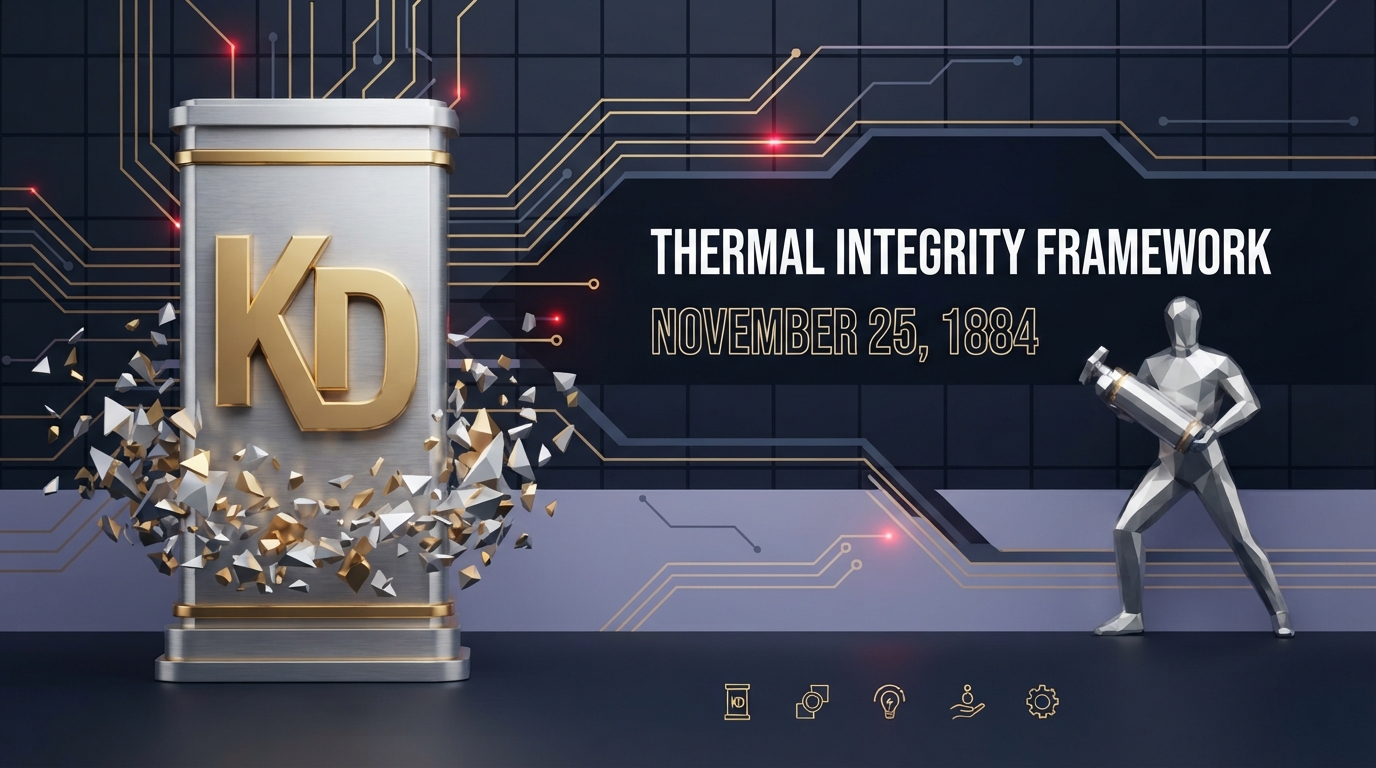
Standing beside a roaring steam cylinder in St. Louis in late 1884, Swiss-born dairy operator John Baptist Meyenberg staked his entire livelihood on a process his former European employers had flatly rejected. At a time when mechanical refrigeration did not exist in ordinary homes, raw milk spoiled within hours, and existing manufacturers dumped massive loads of sugar into cans to suppress bacterial rot. Meyenberg spent seventeen years experimenting at the Anglo-Swiss Condensed Milk Company before resigning and emigrating to America to prove milk could stay pure without additives. On November 25, 1884, the United States Patent Office awarded him Patents 308,421 and 308,422 for an apparatus and method that evaporated roughly sixty percent of the water, sealed the cans inside a revolving frame, and sterilized them with pressurized steam at 248 degrees Fahrenheit. As Meyenberg recorded in his official patent specification, withdrawing all air and vapors before pressurized heating “prevents all changes or the formation of germs of fermentation.” By refusing to disguise spoilage with sweet fillers, he unlocked a resilient human truth: lasting strength comes from courageous discipline that purifies a system at its core rather than covering up weakness.
The Modern Framework
When modern enterprises, defense commands, and public agencies confront rising operational friction, leaders frequently pour expensive software patches, extra approval layers, and rushed overtime over broken workflows like heavy syrup over souring milk. The Thermal Integrity Framework reverses that habit by subjecting core team routines to controlled, high-accountability pressure that evaporates wasted steps and neutralizes hidden failure points before deployment. Institutions that purify their baseline procedures instead of disguising dysfunction build self-sustaining reliability across every unit.
COUNTERFACTUAL AUDIT
The Tactical Pivot
Established nineteenth-century condenseries assumed milk could never survive long-distance transport without saturating it in cane sugar, leaving consumers stuck with a syrupy substitute and limiting military and household adoption. Their blind spot was treating preservation as an additive problem rather than a containment and sterilization challenge. John Meyenberg flipped that logic by removing sixty percent of the water, evacuating trapped air inside a sealed cylinder, and applying exact steam pressure to neutralize bacteria without a single grain of sugar. By attacking the biological source of decay instead of masking its taste, he created a shelf-stable global staple that outlasted every sugar-heavy competitor.
2031–2056 DATA SCIENCE FORECAST
The Future Horizon: 5-to-10 Year & Generational Outlook
Projecting today’s pattern across a 5-to-10 year corporate horizon (2031–2036) through multi-scenario stress simulations reveals a sharp split between teams that purify core workflows and those that patch them. Under an uncalibrated trajectory, enterprises layering generative AI tools atop messy, unverified human processes will experience rapid error compounding as automated agents replicate flawed logic across global supply chains. Conversely, organizations running on a calibrated trajectory—where human workflows are stripped of redundant approvals and verified before automation—will scale output smoothly despite tightening labor demographics. Extending that curve across a 20-to-30 year generational horizon (2046–2056) using infrastructure lifecycle modeling shows that public utilities, municipal grids, and institutional endowments built on quick budget workarounds will face cascading replacement failures, whereas institutions governed by strict periodic sterilization audits will preserve capital across generations. To stay ahead of both curves, executive teams must select their single highest-volume operational workflow this quarter and remove at least three redundant approval steps before deploying any new software tool.
Context & Analysis for High Potentials
When operational pressure spikes during a product launch or budget crunch, high-potential professionals distinguish themselves by calmly isolating the exact step causing delay rather than working frantic late nights to cover the gap. Rising staff groomed for senior roles must treat every recurring task as a closed system, verifying that inputs are clean, instructions are unambiguous, and final outputs require zero rework from supervisors. Demonstrating that level of self-correcting discipline at the front line signals to senior executives that you can safely manage larger budgets and multi-team initiatives without constant oversight.
Internal Leadership Archetype Sync: Evaluate your specific Myers-Briggs personality type against today’s behavioral demand for unvarnished candor—check whether your natural preference leads you to smooth over team friction with polite harmony instead of applying the direct accountability required to fix a broken workflow.
–> Coming Soon: Cross-reference your psychological baseline against today’s operational stress markers to unlock your custom executive development pathway.
Context & Analysis for C-Suite & Government Leaders
Approving emergency budget supplements to keep failing legacy programs afloat drains public treasuries and erodes shareholder equity across every tier of governance. Whether overseeing a Fortune 500 conglomerate, a state infrastructure agency, or a municipal administration, top executives must institute mandatory zero-base operational reviews that retire outdated mandates rather than subsidizing inefficiency. Aligning department heads, legislative committees, and regional directors around a single transparent performance ledger prevents localized turf battles from contaminating national or enterprise-wide priorities. Decisive stewardship means having the institutional backbone to shut down cosmetic initiatives today so capital remains available for vital mission growth tomorrow.